10 Best Lifting Anchors for Heavy Loads?
Choosing the right lifting hardware can determine whether a heavy load moves smoothly or becomes an unstable hazard. Lifting Anchors connect embedded points, slings, and concrete elements during controlled handling. Their performance depends on more than a published capacity. Steel grade, anchor geometry, concrete strength, edge distance, and lifting angles all matter.
This guide examines ten lifting anchors for heavy loads, using practical criteria rather than marketing claims. We consider working load limits, proof testing, corrosion resistance, installation methods, and manufacturer traceability. We also look at real handling details, such as a precast panel leaving a mold, a sling turning sharply, or an anchor sitting close to a concrete edge. These small conditions can change the load path dramatically.
A qualified lifting professional should verify every selection against the actual lift plan. Product instructions and applicable safety requirements remain essential. No ranking is flawless. A strong anchor may still be unsuitable for damaged concrete, repeated rotation, or an unbalanced load. That is easy to overlook.
The options below are intended to support informed comparison, not replace engineering judgment. Experienced riggers often inspect threads, welds, markings, and surrounding concrete before each lift. They also question unusual movement instead of forcing the operation forward. That habit matters. Reliable lifting begins with accurate information, careful inspection, and respect for the limits of every component.
Types of Lifting Anchors and Their Heavy-Load Applications
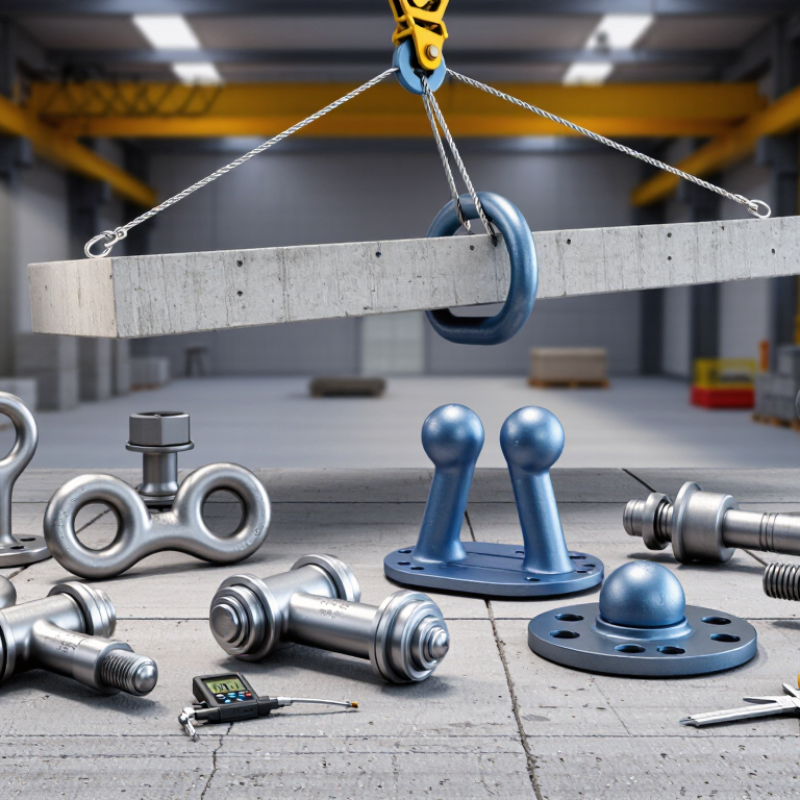
Lifting anchors differ by load path, concrete condition, and installation method. Cast-in plate anchors suit precast beams and wall panels because they distribute force through embedded steel. Threaded inserts work well for repeated lifting points, but only when threads remain clean and fully engaged. Screw-in anchors can support temporary handling, although their capacity depends heavily on concrete quality and installation torque. Swivel anchors help when the sling angle changes. For very heavy panels, spread anchors and matching lifting clutches reduce local bending and edge damage.
The U.S. Bureau of Labor Statistics reported 297 worker deaths in crane-related incidents from 2011 to 2017, as summarized by OSHA. The figure shows why anchor selection cannot rely on appearance. Check the working load limit, concrete strength, embedment depth, edge distance, and sling angle. ASME B30.26 and EN 13155 provide useful guidance for rigging hardware and detachable lifting accessories. A four-leg sling does not automatically share weight equally. Uneven loading is common. I have seen drawings look perfect while site conditions quietly changed.
Tips: Mark every anchor after inspection. Confirm the lifting direction before connection. Use calibrated torque tools for threaded systems. Never mix unverified anchors with certified clutches. Record concrete test results and actual load conditions. A small crack near an anchor deserves a stop, not a guess. Safety data is often incomplete, and that is a reason to investigate more carefully.
10 Best Lifting Anchors for Heavy Loads
Indicative working load limit ranges for common lifting-anchor types used in construction, fabrication, concrete handling, and industrial rigging.
Working load limits vary by design, material, installation method, load angle, edge distance, and inspection status. The ranges shown are indicative engineering reference values; always use the certified rating for the selected anchor and application.
Key Factors for Comparing Strength, Capacity, and Safety
10 Best Lifting Anchors for Heavy Loads?
A credible top-ten list should compare more than rated strength. Start with
working load limit,
material grade,
thread engagement, and the direction of force. A
45-degree sling angle
can raise leg tension by about
41% compared with vertical lifting. Capacity may fall further with side loading, shock loading, corrosion, or high temperature.
ASME B30.26 and ISO lifting-point guidance provide useful inspection and marking benchmarks, but they do not make every anchor suitable for every application.
Safety evidence makes careful selection necessary. The
U.S. Bureau of Labor Statistics recorded
1,075 fatal injuries among construction and extraction workers in 2023. That figure is not limited to anchors, yet it shows why small hardware deserves serious engineering attention. Check permanent markings, certificates, proof-test records, thread condition, and visible deformation. Confirm the supporting structure too.
The strongest anchor can still fail when the base material is weak.
A useful comparison table should show capacity by loading angle, not one impressive number. It should also explain inspection intervals and rejection limits. I have seen specifications that look complete but omit fatigue or corrosion details.
That is a warning sign.
Recheck calculations with a qualified lifting engineer, especially for temporary anchors, unusual geometry, or personnel-adjacent work. There is no universal
“best” anchor; the safest choice matches the actual load path, environment, and inspection discipline.
Ten Recommended Lifting Anchors for Different Load Requirements
10 Best Lifting Anchors for Heavy Loads?
Choosing an anchor depends on load direction, base material, and inspection access. Ten useful options cover different requirements: forged shoulder eye bolts for vertical pulls; swivel hoist rings for angled loading; weld-on lifting lugs for fabricated frames; plate anchors for thin steel sections; cast-in anchors for concrete beams; expansion anchors for approved concrete applications; screw-in anchors for temporary, light-duty handling; flush-mounted anchors where floor clearance matters; spreader-beam anchors for balanced lifting; and articulated anchors for changing pull angles. Each anchor requires a verified working load limit, not a guessed capacity.
The HSE’s LOLER guidance requires lifting accessories to receive thorough examination at suitable intervals. OSHA 1910.184 also requires inspections and removal of defective slings from service. These rules support a practical lesson: the anchor is only one part of the lifting system. Check weld size, thread engagement, edge distance, corrosion, and sling angle before loading.
A 60-degree sling angle can create far more leg tension than many users expect. It is easy to overlook.
For concrete anchors, follow the manufacturer’s tested installation data and the engineer’s substrate assessment. For welded lugs, inspect the parent metal and heat-affected area, not only the lug plate. HSE reported 124 worker fatalities in Great Britain during 2024/25, showing why routine control matters. In practice, color-coded tags help, but tags can fade. Recheck everything.
Installation, Inspection, and Maintenance Procedures
10 Best Lifting Anchors for Heavy Loads?
A lifting anchor is only reliable when its installation matches the approved load path. Check the base material, edge distance, embedment depth, and anchor orientation before drilling. Concrete dust can hide cracks and reduce expansion. Use calibrated torque tools, and record the applied torque. ASME B30.26 recommends following the device manufacturer’s markings, rated capacity, and inspection requirements. Never estimate capacity from appearance.
Inspection must occur before each shift, after unusual loading, and at scheduled intervals. Look for bent components, stretched holes, corrosion, thread damage, cracked welds, and missing identification. A small deformation matters.
OSHA 29 CFR 1910.184 requires daily inspection of lifting slings, and the same disciplined approach benefits fixed anchors. The U.S. Bureau of Labor Statistics reported 865 fatal workplace injuries involving falls, slips, and trips in 2022. Poorly secured lifting points can turn a controlled lift into a sudden drop. My practical weakness is relying too heavily on clean surfaces; hidden corrosion deserves equal attention.
Tips:
Mark each anchor with its working load limit and inspection date. Keep a simple log with photographs. Remove questionable hardware immediately. Do not repaint over cracks or grind away damage. During maintenance, clean threads, protect exposed steel, and replace parts only with approved equivalents. Recheck torque after the first loaded lift when the procedure permits. A second competent person should verify the setup. That extra minute can expose an overlooked angle, damaged washer, or incorrect anchor direction.
How to Select the Right Anchor for Each Lifting Operation
10 Best Lifting Anchors for Heavy Loads?
Choosing a lifting anchor starts with the load, not the catalog picture. Confirm the load’s weight, center of gravity, lifting points, and movement path. A qualified person should verify the working load limit for every anchor and sling combination. The rated capacity can change when the lifting angle becomes shallow. It may also change when the anchor is loaded sideways. Never rely on appearance alone. Steel can look excellent while hiding wear, distortion, or thread damage.
The anchor must match the base material and installation method. Concrete anchors require sound concrete, correct embedment, and clean holes. Welded points need verified weld quality and suitable parent material. Removable anchors should lock fully before loading. I have seen teams recheck the load but forget the anchor orientation. That mistake is easy to make. It can be serious. Inspect pins, threads, eyes, welds, and contact surfaces before each operation. Remove any anchor with cracks, bending, heavy corrosion, or unclear identification.
Tips: Mark each approved anchor with its working load limit and inspection status. Keep the load balanced and lift slowly for the first few inches. Stop if the anchor shifts, the sling tightens unevenly, or the load tilts. Follow applicable lifting standards and the manufacturer’s instructions. Do not improvise with damaged hardware. A second inspection is often worthwhile, especially after an unusual lift.