China Top Lifting Anchors Guide for Safe Construction Practices
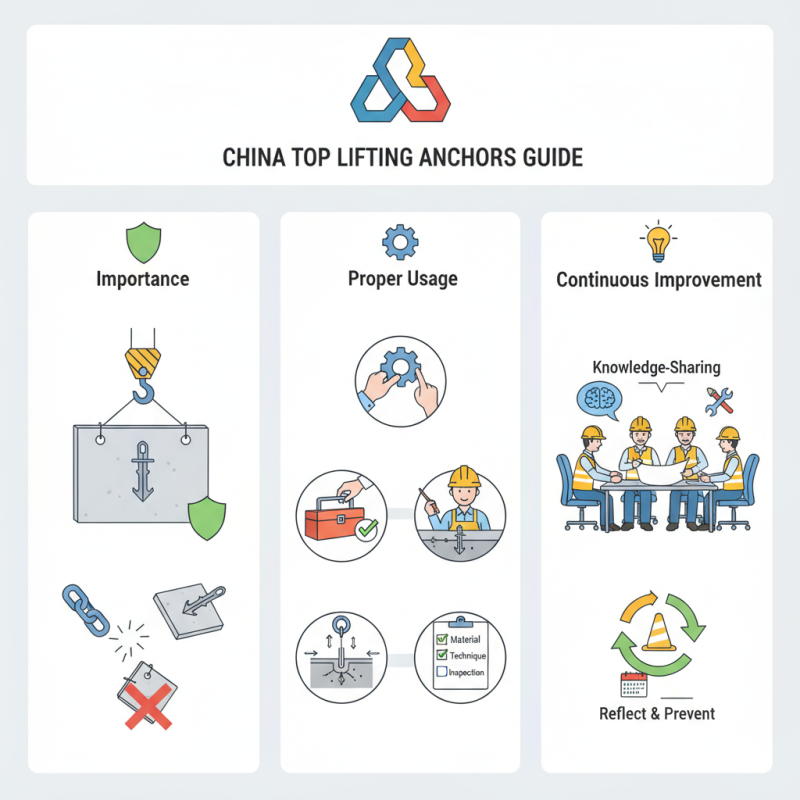
In today's construction landscape, ensuring safety is of utmost importance. Lifting anchors play a critical role in this process. They are essential tools that assist in lifting heavy structures. Incorrect usage can lead to severe accidents and project delays.
Understanding the proper application of lifting anchors is vital for construction professionals. The right choice of materials and techniques can prevent many issues. However, not all practices are foolproof. Some contractors may overlook vital safety checks. This can result in dangerous situations on-site.
Moreover, continuous training in lifting anchor techniques is necessary. Knowledge-sharing among professionals fosters a culture of safety. Ultimately, prioritizing proper lifting anchor usage can lead to safer construction environments. We must reflect on our practices regularly to improve and prevent mishaps.
Understanding Lifting Anchors: Definition and Function in Construction
Lifting anchors are vital components in construction. They provide secure attachment points for lifting equipment. Understanding their design and function is crucial for safety. Lifting anchors come in various types, including embedded and surface-mounted. Each type serves a specific purpose based on the project’s requirements.
When using lifting anchors, installation accuracy is essential. Misalignment can lead to catastrophic failures. Regular inspections help identify potential issues early. Documentation should accompany every installation. This promotes accountability and enhances safety protocols. Workers must be trained to recognize signs of wear or damage.
Despite their importance, some projects overlook proper lifting anchor usage. This can stem from haste or inadequate training. Each construction site presents unique challenges. Reflecting on past mistakes can improve future practices. Embracing a culture of safety ensures that lifting anchors are used correctly, preserving lives and maintaining project integrity.
China Top Lifting Anchors Guide for Safe Construction Practices
| Anchor Type |
Load Capacity (kN) |
Material |
Common Uses |
Installation Method |
Safety Factor |
| Mechanical Expansion Anchor |
10 - 50 |
Steel |
Concrete structures, heavy machinery |
Drilled hole and expansion |
5:1 |
| Welded Socket Anchor |
15 - 70 |
Steel |
Structural steel applications |
Welding |
4:1 |
| Drop-In Anchor |
10 - 40 |
Stainless Steel |
Light to medium loads in concrete |
Hammer set into pre-drilled hole |
5:1 |
| Adhesive Anchor |
20 - 90 |
Epoxy-coated Steel |
Heavy loads in concrete and masonry |
Inject adhesive into drilled holes |
6:1 |
| Post-installed Anchor |
15 - 60 |
Carbon Steel |
General construction, anchoring equipment |
Drilled and set with adhesive or expansion |
4:1 |
Types of Lifting Anchors: Common Variants and Their Applications
Lifting anchors play a critical role in construction. Various types cater to different applications. Understanding these variants is essential for safe practices.
Common lifting anchors include the cast-in-place anchors. They are typically embedded in concrete. These anchors provide reliable support. They suit heavy loads in structural elements. However, improper installation can lead to failures.
Another variant is the mechanical anchor. These anchors use expansion mechanisms. They are easy to install with minimal tools. However, their load capacities vary significantly. It’s crucial to choose the right type for your project. Always consider the environmental factors. Weather and soil conditions influence performance.
A less common option is the adhesive anchor. It uses resin to bond the anchor in place. While providing strong hold, they need careful application. Any inconsistency during installation can jeopardize safety. Each type of anchor has its advantages and drawbacks. Therefore, careful consideration is necessary for successful lifting operations.
Types of Lifting Anchors and Their Applications
Best Practices for Installing and Inspecting Lifting Anchors
When it comes to installing lifting anchors, precision is key. Proper installation can prevent accidents and ensure structural integrity. Begin by choosing the right anchor type for your specific application. Encourage your team to read the installation guidelines thoroughly. Many sites overlook this step, leading to potential failures.
Inspections are equally critical. Regular checks help identify wear and tear before issues escalate. Conduct visual inspections of anchors before each use. Look for signs of rust, cracks, or deformation. Such details are easy to miss but crucial for safety. Documenting these inspections can serve as a reference over time.
Creating a checklist for both installation and inspection can enhance compliance. Encourage feedback from workers about the process. Sometimes, their insights reveal practical issues that standards don't address. This collaborative approach can improve anchor use and ensure everyone feels responsible for safety.
Troubleshooting Common Issues with Lifting Anchors in Construction Projects
Lifting anchors are crucial for safe construction practices. However, issues can arise that affect their performance. Common problems include improper installation and inadequate load-bearing capacity. These can lead to serious safety hazards. For instance, anchors may fail if not set at the correct angle or depth. Regular inspections help in identifying such faults before they escalate into accidents.
Another frequent problem is corrosion. Environmental factors can weaken anchors over time. It is vital to select materials resistant to corrosion for specific conditions. To mitigate risks, consider regular maintenance checks. Checking for signs of wear can prevent unexpected failures. Workers should also be trained to recognize these signs.
Lastly, clear communication among team members is essential. Misunderstandings can result in misuse. Ensure that everyone understands the lifting anchor's specifications and limits. If problems persist, consulting a construction expert is wise. Seeking professional advice can provide new perspectives for troubleshooting.