10 Essential Tips for Choosing Hexagonal Nuts for Your Projects
In the fast-evolving world of fasteners, hexagonal nuts play a pivotal role in ensuring the integrity and reliability of various projects. As noted by industry expert Dr. Emily Harper, a leading authority at the Fastener Quality Institute, "The right choice of hexagonal nuts can significantly enhance the performance and longevity of your assemblies." With so many options available, selecting the appropriate hexagonal nuts for a specific application can be daunting.
In this article, we will explore ten essential tips that will guide you in making informed decisions when choosing hexagonal nuts for your projects. Whether you are working with heavy machinery, constructing frameworks, or engaging in light-duty applications, understanding the nuances of hexagonal nuts—from material selection to load capacity—is crucial for achieving optimal results. Join us as we delve into the key factors that will empower you to select the best hexagonal nuts tailored to your needs, ensuring safety, efficiency, and durability in your work.
Understanding Hexagonal Nut Types and Their Applications
Hexagonal nuts are pivotal components in many construction and engineering projects, serving the essential function of fastening and connecting various elements. Understanding the different types of hexagonal nuts available can ensure the right choice for your specific application. Common types include standard hex nuts, lock nuts, and flange nuts, each offering unique benefits. For instance, lock nuts are designed to prevent loosening under vibration, making them ideal for equipment subjected to dynamic forces.
Moreover, the use of materials significantly influences a hexagonal nut's performance. High-strength stainless steel options, such as those made from 304 grade, exhibit superior corrosion resistance and are suitable for applications where durability is critical. Recent industry reports indicate that stainless steel hex nuts are gaining popularity due to their excellent strength-to-weight ratio and long service life, particularly in harsh environments. The global demand for such components is projected to continue growing, driven by advances in construction and manufacturing technologies. When selecting hexagonal nuts, it’s essential to consider both the type and material in relation to the specific demands of your project.
Hexagonal Nuts Application Insights
Material Selection: Which Metal or Alloy is Right for Your Project?
When selecting hexagonal nuts for your project, the choice of material is crucial to ensure durability and compatibility with your application. Common materials include carbon steel, stainless steel, and various alloys. Carbon steel nuts are often chosen for their strength and affordability, making them ideal for general use in less corrosive environments. However, when projects require enhanced oxidation resistance or are exposed to harsh conditions, stainless steel becomes the preferred option, offering an excellent balance between resilience and corrosion resistance.
Alloy nuts, which might include materials like brass or titanium, are suited for specialized applications. Brass nuts provide good corrosion resistance and conductivity, making them suitable for electrical applications. On the other hand, titanium nuts are favored in aerospace and high-performance scenarios due to their exceptional strength-to-weight ratio and resistance to extreme temperatures. Understanding the specific environmental conditions and performance requirements of your project will help in making an informed decision about the right metal or alloy for your hexagonal nuts.
Evaluating Size and Thread Specifications for Optimal Fit
When choosing hexagonal nuts for your projects, evaluating size and thread specifications is crucial to ensure an optimal fit. According to industry standards, common sizes range from M3 to M30, with the choice largely dependent on the application requirements. Analyzing the proper thread diameter and pitch is essential; for instance, an improper pitch can lead to weak connections and potential failure in mechanical applications. An American National Standards Institute (ANSI) report emphasizes that a well-fitted nut can reduce wear and prolong the life of both the nut and the bolt it secures, underscoring the importance of precise specifications.
Moreover, it’s important to consider the material and its compatibility with the intended use. Zinc-plated steel, for example, provides corrosion resistance, making it suitable for outdoor projects. However, for high-stress environments, materials such as stainless steel or even specialty alloys may be recommended. Reports indicate that nearly 40% of mechanical failures in assembly processes are attributed to the use of incorrectly specified fasteners. Thus, understanding and selecting the appropriate size and thread specification not only ensures safety and reliability but also enhances the overall efficiency of the project.
Importance of Finish and Coating for Durability and Corrosion Resistance
When selecting hexagonal nuts for your projects, one crucial factor to consider is the finish and coating, which significantly impacts the durability and corrosion resistance of the hardware. According to a report by the American Society for Testing and Materials (ASTM), over 75% of fastener failures in structural applications are due to corrosion-related issues. Therefore, choosing the right finish can extend the lifespan of the nuts and prevent costly maintenance and replacements.
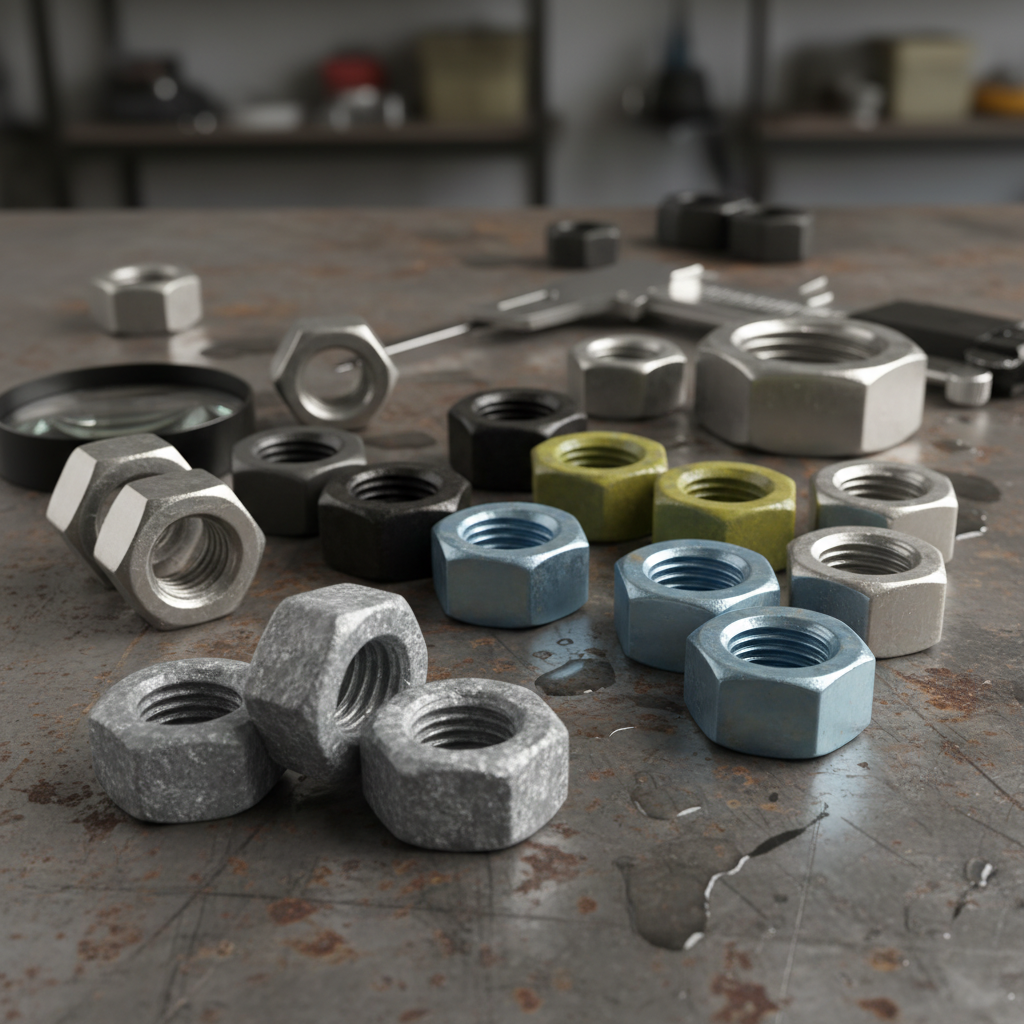
Proper coatings like zinc plating or hot-dip galvanization can increase resistance to corrosive elements. A study from the Fastener Quality Act indicates that components with a durable finish can endure harsher environments, such as marine or industrial settings, where humidity and exposure to chemicals are prevalent. For instance, hot-dip galvanization can provide up to 50 years of corrosion resistance compared to uncoated fasteners, which might only last a few years in similar conditions. Investing in quality finishes not only ensures the integrity of your projects but also enhances overall safety and performance in the long run.
Cost-Effectiveness: Balancing Quality and Budget in Your Purchase
When selecting hexagonal nuts for your projects, the balance between quality and budget is paramount. Industry reports indicate that while the initial cost of high-quality nuts may be higher, their durability can lead to significant long-term savings. According to the market analysis by Grand View Research, the global fastener market is expected to reach $112.9 billion by 2025, primarily driven by the demand for high-performance materials. This suggests that investing in quality hexagonal nuts not only reduces the frequency of replacements but also enhances the overall efficiency of projects.
Another crucial factor to consider is the material used in the nuts. Stainless steel hexagonal nuts, for instance, offer corrosion resistance and strength, which might justify a higher upfront cost. A survey conducted by the Fastener Quality Act highlights that approximately 60% of fastener failures are due to poor material quality. Therefore, choosing the right nut can mitigate risks associated with project delays and costly repairs, reinforcing the importance of balancing cost and quality. By making informed choices, you can optimize your budget while ensuring reliability and performance in your projects.
10 Essential Tips for Choosing Hexagonal Nuts for Your Projects - Cost-Effectiveness: Balancing Quality and Budget in Your Purchase
| Tip Number |
Tip Description |
Quality Factor |
Cost Range ($) |
Common Applications |
| 1 |
Determine the Material Requirements |
High tensile strength |
$0.05 - $0.50 |
Construction, Automotive |
| 2 |
Consider the Finish Type |
Corrosion resistance |
$0.10 - $1.00 |
Marine, Manufacturing |
| 3 |
Verify the Size Requirements |
Precision fit |
$0.02 - $0.30 |
Electronics, Aerospace |
| 4 |
Examine the Thread Type |
Compatibility |
$0.03 - $0.40 |
Industrial, DIY |
| 5 |
Assessing Load Requirements |
Strength standards |
$0.20 - $2.00 |
Construction, Transport |
| 6 |
Research Supplier Reputation |
Reliability |
N/A |
General Use |
| 7 |
Evaluate Packaging Options |
Ease of use |
$0.01 - $0.10 |
Retail, Bulk |
| 8 |
Understand the Tolerance Levels |
Quality assurance |
$0.10 - $1.50 |
Precision tools |
| 9 |
Compare Costs Across Suppliers |
Cost efficiency |
$0.02 - $0.60 |
All sectors |
| 10 |
Make a Purchase Decision |
Final assessment |
N/A |
Depending on project |