Inquiry
Form loading...

China Top 10 Special Nuts Manufacturers for Global Buyers

Choosing a reliable Special Nuts manufacturer requires more than comparing unit prices. Global buyers need consistent threads, verified materials, stable production, and responsive communication. This guide introduces ten manufacturers serving international industrial markets. It explains the strengths buyers should examine. Each profile should be treated as a starting point, not a final purchasing decision. Fit matters.

The review focuses on practical evidence, including product range, forming capabilities, inspection systems, certifications, export experience, and customization support. Important details include stainless steel grades, carbon steel treatments, plating options, dimensional tolerances, and packaging for long-distance transport. A dependable supplier can provide drawings, inspection reports, sample approvals, and traceable batch information. Buyers should confirm current certificates, production capacity, minimum order quantities, and delivery terms directly with each company. Factory photos help, but documented processes matter more. Small gaps in evidence deserve questions.

Special Nuts may serve construction, automotive, machinery, energy, and maintenance applications. However, one manufacturer rarely fits every project. Price can hide tooling costs, testing fees, or inconsistent finishing. A careful comparison considers total cost, failure risk, communication speed, and after-sales support. This article aims to make supplier research clearer and more disciplined. Still, rankings are imperfect because capabilities change, markets differ, and public information may be incomplete. Request current samples and technical documents before committing. That simple step can prevent expensive surprises.
China Top 10 Special Nuts Manufacturers for Global Buyers

What Defines a Special Nuts Manufacturer in China?

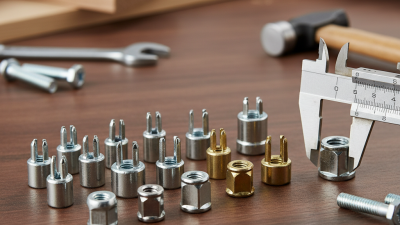
A special nuts manufacturer in China does more than produce standard hex nuts. It interprets drawings, thread specifications, material grades, and difficult operating conditions. Experienced teams can develop prevailing-torque nuts, welded nuts, flange nuts, and other custom fasteners for machinery, construction, and transport equipment. They should discuss tolerances before quoting, not after production begins.

Reliable manufacturers usually combine engineering support with controlled production. Look for material certificates, calibrated gauges, heat-treatment records, and traceable batch numbers. On a factory visit, inspect thread rolling, stamping, machining, and surface treatment areas. Ask how workers separate mixed lots. Ask how rejected pieces are recorded. These details reveal daily discipline better than polished brochures.

Quality needs evidence.

Independent testing can verify hardness, coating thickness, dimensions, and torque performance. A manufacturer may hold recognized quality certifications, but buyers should confirm the certificate scope and validity. Clear sampling plans and pre-shipment inspections also reduce risk. Still, no factory is perfect. A first sample may pass while a later batch shows burrs or uneven plating. That possibility deserves attention. Practical buyers request pilot orders, retain approved samples, and define corrective-action timelines in writing. Communication matters too. Engineers who explain limitations honestly are often more dependable than sales teams promising every feature. For global buyers, the strongest partner is not simply the cheapest source. It is a manufacturer that can repeat the required result.
Key Criteria for Evaluating Chinese Nut Manufacturers

For global buyers, evaluating a Chinese nut manufacturer requires more than comparing prices or factory photographs. A reliable assessment starts with raw material control, not attractive packaging. Ask where each nut is grown, how suppliers are approved, and how harvest lots are identified. Request recent test reports for moisture, aflatoxins, pesticide residues, allergens, and microbiological limits. Verify laboratories and certificates independently. During an audit, inspect storage floors, ventilation, pest controls, and temperature records. A clean room matters. Yet one visit cannot prove consistent performance.

Product expertise appears in grading, roasting, seasoning, and packing controls. Review written specifications for size, broken kernels, color, flavor, foreign materials, and permitted ingredients. Request samples from several production dates, rather than one carefully selected carton. Compare results with your target market’s labeling, allergen, and import requirements. Ask how the manufacturer handles rejected lots, customer complaints, recalls, and corrective actions. Strong traceability should connect a finished case to a raw-material lot within minutes, not days. Confirm production capacity using actual monthly records, not only installed machinery. This reveals seasonal gaps.

Commercial reliability also depends on communication, lead times, packaging strength, and document accuracy. Check whether contracts define inspection rights, tolerances, payment stages, and responsibility for damaged cargo. A small pilot order can test moisture stability, carton durability, and response speed under real conditions. Do not ignore human judgment. A supplier may pass an audit yet struggle with sudden volume changes. I would record every concern, including vague answers and delayed evidence. Some uncertainty is unavoidable, but unexplained uncertainty deserves a lower evaluation score.

Key Criteria for Evaluating Chinese Nut Manufacturers

Recommended buyer-assigned evaluation weights for comparing special nut manufacturers. The framework emphasizes food safety, product consistency, supply reliability, and export readiness rather than company or brand data.

Buyers should verify certificates, audit records, laboratory reports, traceability documents, product specifications, and shipment performance before making a supplier decision. Weights can be adjusted according to product risk and destination-market requirements.

China’s Top 10 Special Nuts Manufacturers for Global Buyers

China’s Top 10 Special Nuts Manufacturers for Global Buyers

China remains a major sourcing base for precision nuts, lock nuts, welded nuts, and corrosion-resistant fasteners. Grand View Research estimates that the global industrial fasteners market reached USD 88.89 billion in 2023. It also projects a 4.9% compound annual growth rate from 2024 to 2030. This demand supports wider investment in cold forging, CNC machining, heat treatment, and automated inspection.

For global buyers, the leading ten manufacturers should be assessed beyond catalog size. Strong suppliers normally provide ISO 9001 quality systems, material certificates, dimensional reports, and traceable batch records. Automotive projects may require IATF 16949 controls, while marine applications often need verified stainless-steel grades and salt-spray testing. Ask for sample measurements. Paperwork alone can miss thread damage, plating variation, or hardness drift.

A practical audit should examine die maintenance, gauge calibration, packaging, and corrective-action records. The China Fasteners Industry Association has repeatedly highlighted automation and quality consistency as key industry priorities. Yet rankings are not permanent. A factory with excellent equipment may still struggle with small custom orders or changing drawings. Buyers should compare first-article results, delivery history, and communication speed before naming a supplier among China’s top ten. Small details matter.

China Top 10 Special Nuts Manufacturers for Global Buyers - China’s Top 10 Special Nuts Manufacturers for Global Buyers

Rank Supplier Code Main Manufacturing Region Special Nut Categories Common Product Standards Typical Size Range Surface Treatments Material Options Quality Documentation Export & Packaging Capability
1 CN-SN-01 Jiangsu Weld Nuts Flange Nuts T-Nuts DIN, ISO, GB/T, ANSI/ASME M3–M16; metric and inch threads Zinc plating, black oxide, phosphate, plain Carbon steel, stainless steel, alloy steel Material certificates, dimensional inspection, hardness reports Bulk cartons, pallets, export seaworthy packing
2 CN-SN-02 Zhejiang Lock Nuts Nylon Insert Nuts Prevailing Torque Nuts DIN 985, DIN 982, ISO 7040, GB/T M4–M24; fine and coarse threads Electro-zinc, hot-dip galvanizing, Dacromet-type coatings Carbon steel, stainless steel A2/A4, brass Torque testing, salt-spray reports, RoHS/REACH declarations when requested Barcode labeling, mixed-size cartons, container consolidation
3 CN-SN-03 Shandong Heavy Hex Nuts Structural Nuts Jam Nuts ASTM A563, ASTM A194, ASME B18.2.2 1/4 in–2 in; metric sizes available Plain, hot-dip galvanized, zinc flake Grade 8, Grade 10, ASTM carbon and alloy steel Heat-lot traceability, tensile testing, hardness and coating records Heavy-duty export cartons, steel pallets, moisture protection
4 CN-SN-04 Guangdong Captive Nuts Cage Nuts Panel Nuts DIN, ISO, IEC-related equipment requirements M3–M12; metric thread focus Nickel plating, zinc plating, passivation, black finish Carbon steel, stainless steel, spring steel First-article inspection, gauge records, RoHS/REACH support Tray packing, partitioned cartons, small-lot export fulfillment
5 CN-SN-05 Hebei Square Nuts Tee Nuts Custom Nuts DIN, GB/T, ANSI, customer drawings M4–M30; custom dimensions available Hot-dip galvanizing, zinc plating, black oxide, plain Low-carbon steel, alloy steel, stainless steel Dimensional reports, chemical composition, batch traceability OEM marking, drawing-based production, palletized shipments
6 CN-SN-06 Jiangxi Rivet Nuts Blind Rivet Nuts Knurled Nuts ISO 15977, ISO 15978, DIN-compatible specifications M3–M12; round, hexagonal and reduced-body types Zinc plating, passivation, black zinc, plain aluminum finish Steel, stainless steel, aluminum Pull-out testing, spin-out testing, dimensional inspection Plastic bags, compartment boxes, retail-ready labeling
7 CN-SN-07 Hunan Wheel Nuts Cap Nuts Automotive Nuts DIN, ISO, SAE, automotive customer specifications M10–M22; common automotive thread profiles Geomet-type coating, zinc plating, chrome, black finish Medium-carbon steel, alloy steel, stainless steel Torque-angle records, hardness testing, PPAP support when required Lot-controlled packing, anti-rust paper, automotive traceability
8 CN-SN-08 Fujian Stainless Steel Nuts Marine Nuts Wing Nuts ISO, DIN, ASTM F594, GB/T M3–M24; metric and UNC/UNF options Passivated, electropolished, plain, polished 304/A2, 316/A4, duplex grades subject to order Mill test certificates, PMI testing, passivation records Moisture-resistant packing, export cartons, mixed-container orders
9 CN-SN-09 Henan Anchor Nuts Construction Nuts Sleeve-System Nuts DIN, EN, ASTM, project-specific construction standards M8–M36; metric heavy-duty sizes Hot-dip galvanized, electro-galvanized, plain Carbon steel, high-strength alloy steel Yield and tensile reports, coating thickness, batch inspection Bulk export packing, steel bands, project-based shipment schedules
10 CN-SN-10 Shanghai and nearby manufacturing clusters Precision Nuts Thin Nuts CNC-Custom Nuts ISO, DIN, ANSI/ASME, customer drawings M2–M30; tight-tolerance and special profiles Nickel, chrome, zinc, passivation, PTFE-based coatings Stainless steel, brass, aluminum, alloy steel CMM reports, thread-gauge records, PPAP and inspection plans Protective individual packing, serial labels, sample approval workflow
Buyer note: Product availability, certifications, dimensions, coatings, minimum order quantities and export terms should be confirmed directly with each supplier before purchasing. Standards listed are commonly requested specifications and may vary by product series.

Product Quality, Certifications, and Processing Capabilities

China Top 10 Special Nuts Manufacturers for Global Buyers

For global buyers, product quality starts with traceable raw materials, not attractive packaging. The USDA Foreign Agricultural Service’s 2024 Tree Nuts report identifies China as a major walnut producer and exporter. This position creates strong sourcing opportunities for walnuts, pine nuts, chestnuts, and mixed kernels. However, harvest conditions differ by region and year. Buyers should request lot-specific moisture, aflatoxin, pesticide, and microbiological test results. A clean sample is not enough.

Processing capability deserves equal attention. Reliable manufacturers should show metal detection, optical sorting, controlled roasting, and allergen separation. Ask for production flow records, calibration logs, and retained samples. ISO 22000 or HACCP systems indicate structured food-safety controls, while BRCGS certification can support retailer requirements. ISO’s 2023 Survey recorded more than 1.2 million ISO 9001 certificates worldwide, showing certification’s broad adoption. Yet certificates alone do not prove daily discipline.

Audit the details. Check whether the certificate covers the actual factory and product scope. Confirm batch coding, cold storage temperature, packaging oxygen control, and recall procedures. Processing lines should handle broken kernels without hiding defects through excessive roasting. That happens sometimes. Independent laboratory verification remains valuable, especially for aflatoxins and pesticide residues. The strongest manufacturers provide transparent records, flexible specifications, and pilot batches before full production. A buyer’s own inspection still matters. Supplier rankings should reflect evidence, not promises.

How Global Buyers Can Select the Right Chinese Supplier

Choosing among China’s top 10 special nuts manufacturers requires more than comparing quotations. Global buyers should verify material grades, thread accuracy, heat treatment, and surface protection. A reliable supplier should provide mill certificates, inspection records, and traceable batch numbers. Request sample nuts before approving mass production. Check dimensions with calibrated gauges, not visual inspection alone.

The World Bank’s 2023 Logistics Performance Index gives China a score of 3.7 out of 5, supporting its strong export infrastructure. However, logistics strength does not guarantee factory consistency. The 2023 ISO Survey shows China has one of the world’s largest ISO 9001 certification bases. Certification helps, but it cannot replace an on-site audit. Review production capacity, testing equipment, worker training, and corrective-action records. I have seen attractive samples fail when production volumes increased. That risk deserves attention.

Tips: Ask for a live factory video, recent third-party test reports, and three export references. Compare total landed cost, not only unit price. Confirm packaging, tolerances, delivery terms, and inspection responsibility in writing. A practical supplier scorecard can assign 30% to quality, 25% to consistency, 20% to delivery, 15% to communication, and 10% to price. This weighting may need adjustment for urgent projects. Always test the final batch before shipment.