Inquiry
Form loading...

Top 10 Pole Line Hardware Suppliers for Global Buyers

Choosing reliable Pole Line Hardware suppliers is not a simple price comparison. Global buyers must examine strength, corrosion resistance, compatibility, and delivery performance. A polished catalog can still hide weak documentation or inconsistent production.

This guide introduces ten suppliers serving utility, telecommunications, and infrastructure markets. The selection considers manufacturing experience, product range, quality systems, testing records, export capability, and after-sales support. It also recognizes regional differences. A galvanized steel clamp suitable for a dry inland network may perform differently near saltwater or heavy industrial pollution.

Details matter greatly. Engineering design historian Henry Petroski often reminded readers, “The devil is in the details.” That principle applies directly to Pole Line Hardware. Thread accuracy, coating thickness, hole alignment, and load ratings can affect installation time and long-term network safety.

Field experience remains valuable. Buyers should request material certificates, dimensional drawings, inspection reports, and clear warranty terms. They should also confirm compliance with applicable standards before placing large orders. A supplier may offer competitive pricing, yet unreliable lead times can delay an entire pole-line project.

Not every supplier fits every market. Some are stronger in transmission fittings, while others specialize in distribution hardware or communication attachments. This list is a practical starting point, not a final verdict. Product quality can vary by factory, batch, and application.

Read the comparisons carefully. Ask harder questions. The best supplier is usually the one that combines dependable hardware, transparent evidence, and realistic support after shipment.
Top 10 Pole Line Hardware Suppliers for Global Buyers

What Pole Line Hardware Includes and Why Global Buyers Need It

Pole line hardware includes the fittings that support, connect, protect, and tension overhead power lines. Common items include crossarms, insulators, line guards, clamps, brackets, guy wires, anchors, bolts, and grounding components. Each part has a practical job. A clamp holds the conductor firmly. An insulator separates energized wires from the pole. A grounding set helps direct fault current safely into the earth.

Global buyers need these components to build reliable distribution networks in different climates and terrains. Coastal projects may require corrosion-resistant finishes. Cold regions need hardware that tolerates ice loads and brittle temperatures. Rural installations often demand stronger anchors for uneven soil. In dense cities, compact brackets can simplify work around buildings and narrow roads. Small details matter here. A poorly matched bolt can delay an entire crew.

When comparing the top 10 pole line hardware suppliers, buyers should examine material standards, load ratings, testing records, and production consistency. Ask for dimensional drawings and sample inspection reports. Check whether packaging protects threaded parts during long sea transport. Experienced procurement teams also confirm traceability for steel, aluminum, and protective coatings. Specifications alone are not enough. Field conditions often expose gaps. A design may pass a laboratory test but perform poorly after repeated vibration or salt exposure. That is why technical communication, responsive support, and realistic delivery data deserve equal attention. Mistakes happen, even with careful purchasing. Careful review reduces their cost.

How to Evaluate the Top 10 Pole Line Hardware Suppliers

Evaluating pole line hardware suppliers starts with evidence, not polished catalogs. The IEA estimates that 80 million kilometres of grids must be added or replaced by 2040. That pressure makes dependable procurement practical, not optional. Request test reports for tensile strength, corrosion resistance, temperature cycling, and galvanized coating thickness. Ask whether tests cover the exact fitting, batch, and installation load. Generic certificates are not enough.

Compare suppliers through a weighted scorecard. Give quality 30%, standards compliance 20%, delivery 20%, technical support 15%, and total cost 15%. Use IEC 61284 requirements for overhead lines as a technical reference, then match them to local utility rules. Check material certificates, inspection records, change-control procedures, and traceability from production to shipment. The World Bank’s 2023 Logistics Performance Index shows why logistics deserves attention: delivery predictability remains a measurable supply-chain issue.

Visit the production site when project value allows. Look for calibrated equipment, controlled storage, realistic sampling, and workers who can explain failure modes. Ask for two references with similar voltage, climate, and loading conditions. Price alone misleads. I have seen low bids become expensive after rust, missing washers, or repeated inspections. That is an experience-based warning, not a universal rule. No scorecard is perfect. Review assumptions openly, and leave room for corrective action before signing.

Supplier Profiles: Product Range, Manufacturing Strength, and Market Reach

Top 10 Pole Line Hardware Suppliers for Global Buyers

The strongest pole line hardware suppliers offer more than long product lists.

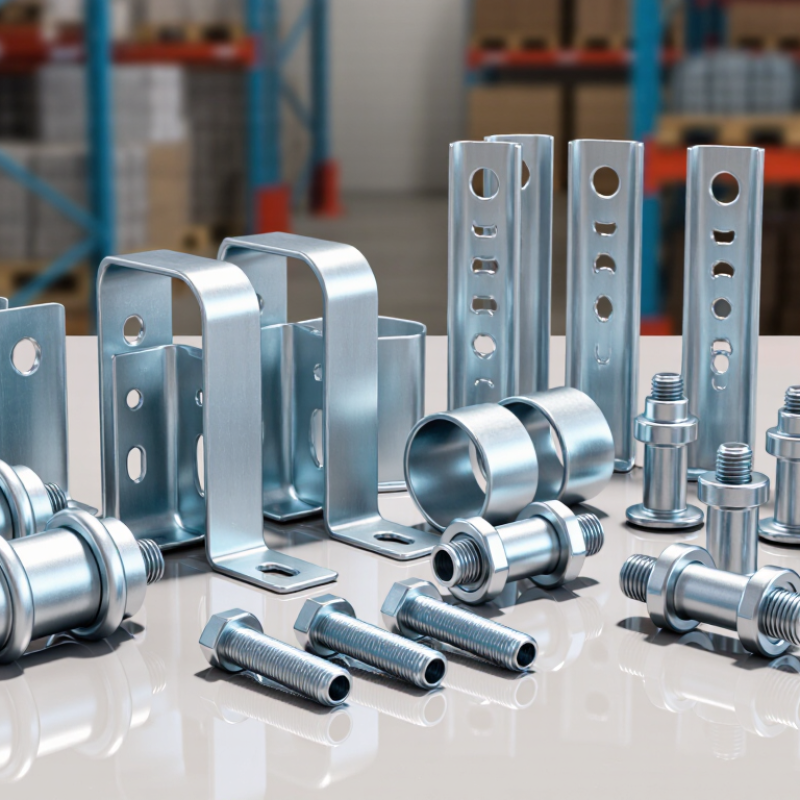
Their ranges usually include crossarm fittings, suspension clamps, guy attachments, pole bands, brackets, bolts, and grounding components. Experienced buyers should check material grades, coating thickness, thread accuracy, and load ratings. A clear drawing can prevent an expensive mistake.

Manufacturing strength appears in practical details.

Reliable suppliers maintain forging, stamping, machining, galvanizing, and inspection capabilities under controlled procedures. Factory audits should review production records, calibration certificates, sample testing, and packaging methods.

Documentation matters. Some suppliers provide complete test reports, while others only share attractive catalog images. Samples reveal gaps. That difference affects project safety and installation speed.

Market reach depends on more than export volume.

Strong suppliers understand container loading, port documentation, regional standards, and replacement-part planning. They can support utility contractors across different climates, from coastal humidity to dry, dusty transmission corridors.

Ask about lead times during peak seasons and their response to damaged shipments. Communication quality is also evidence of reliability.

No supplier is flawless. Even a capable manufacturer may overlook a small washer specification or underestimate customs delays. Buyers should compare ten profiles carefully, verify claims independently, and keep written approval records before placing large orders.

Comparing Quality Standards, Customization, Pricing, and Delivery

Top 10 Pole Line Hardware Suppliers for Global Buyers

Quality should be measured, not assumed. For pole line hardware, buyers should request material certificates, coating thickness records, and batch-level test results. IEC 61284 covers overhead-line fittings, while ISO 9001 supports consistent production controls. Hot-dip galvanizing also deserves close review; uneven coating often appears around threads, holes, and sharp edges. Field experience shows that small defects create costly installation delays. Still, certification alone is not proof of long-term performance.

Customization affects both engineering fit and total cost. Suppliers should confirm pole dimensions, conductor loads, wind conditions, corrosion exposure, and local installation practices before quoting. The IEA’s Electricity Grids and Secure Energy Transitions report estimates annual global grid investment must exceed 600 billion dollars by 2030. This pressure encourages faster sourcing, but rushed drawings can produce expensive revisions. A careful supplier will provide samples, dimensional drawings, and a controlled approval process. Sometimes, the cheapest quote is simply incomplete.

Pricing should include tooling, testing, packaging, inland transport, and replacement risk. Delivery claims need evidence, such as production capacity, safety stock, and historical on-time performance. The World Bank’s 2023 Logistics Performance Index highlights shipment reliability as a major trade concern, not just freight speed. Buyers should compare delivered cost, not unit price. A practical benchmark includes a pilot order of 50 to 100 sets, followed by inspection before volume production. This approach is slower, but usually more honest.

Top 10 Pole Line Hardware Suppliers for Global Buyers - Comparing Quality Standards, Customization, Pricing, and Delivery

Anonymized supplier comparison based on commonly published utility-hardware requirements and practical international procurement benchmarks.

Rank Supplier Profile Typical Product Scope Quality Standards & Controls Customization Capability Indicative Price Level Typical Lead Time Export Readiness Overall Score
1 Supplier Profile 01
High-volume utility manufacturer
Pole-line clamps Crossarms Insulator fittings Guying hardware ISO 9001 quality system; dimensional inspection; mechanical load testing; hot-dip galvanizing commonly specified to ISO 1461 or ASTM A123. High: drawings, hole patterns, coatings, thread sizes, packaging, and private-label documentation. Medium 25–45 days for standard orders; 45–70 days for engineered items. Strong documentation, palletized export packing, and multi-region shipping experience. 9.1
2 Supplier Profile 02
Transmission-grade component specialist
Suspension fittings Tension fittings Clevises Links Traceable raw materials; tensile and proof-load testing; corrosion-protection records; IEC and ASTM requirements supported by project specification. Very high: engineered assemblies, conductor compatibility, load ratings, and custom forging or casting options. Medium–High 35–60 days, depending on tooling and test requirements. Good technical submittals, inspection plans, and third-party inspection coordination. 8.9
3 Supplier Profile 03
Distribution-network hardware producer
Pole bands Brackets Stirrups Cable supports ISO 9001 practices; coating-thickness checks; routine dimensional inspection; product testing aligned with utility purchaser specifications. High: metric and imperial dimensions, galvanized or stainless options, and rapid drawing revisions. Low–Medium 20–40 days for catalog items; 35–55 days for customized parts. Suitable for mixed-container orders and recurring distribution projects. 8.7
4 Supplier Profile 04
Forged and machined hardware specialist
Bolts Eye nuts Anchor rods Forged fittings Material certificates; hardness and tensile testing; thread-gauge inspection; galvanizing inspection based on ISO 1461 or equivalent requirements. Very high: forging dies, thread standards, special lengths, machining tolerances, and heat-treatment requirements. Medium 30–55 days; tooling may add 10–25 days to initial orders. Reliable export packing and clear material-certification packages. 8.6
5 Supplier Profile 05
Composite and corrosion-resistant hardware provider
Polymer brackets Stainless fittings Composite crossarms Cable accessories UV, environmental, and mechanical testing; material batch control; corrosion-resistant designs; project-specific IEC or ASTM testing available. High: polymer grades, stainless-steel alloys, mounting interfaces, colors, and application-specific geometry. Medium–High 40–75 days, especially for composite or molded products. Strong technical support; shipping volume may be more limited than for steel hardware. 8.4
6 Supplier Profile 06
Overhead-line connector manufacturer
Aluminum connectors Parallel clamps Repair sleeves Grounding clamps Electrical-resistance testing; torque verification; alloy and plating control; connector performance evaluated against relevant utility and ASTM requirements. Medium–High: conductor sizes, groove profiles, bolt configurations, and corrosion-protection options. Medium 25–50 days for standard ranges; 45–65 days for new conductor sizes. Good product labeling, packing lists, and conductor compatibility data. 8.3
7 Supplier Profile 07
Cost-focused galvanized hardware supplier
U-bolts Pole steps Washers Straps Basic quality-management controls; dimensional sampling; coating-thickness checks; batch inspection available upon request. Medium: common dimensions and packaging changes are practical; complex engineering changes may require higher volumes. Low 18–35 days for standard products; 30–50 days for custom sizes. Competitive for container quantities and repeat orders; inspection scope should be defined contractually. 8.0
8 Supplier Profile 08
Regional utility-project integrator
Pole-line assemblies Earthing kits Guy assemblies Installation sets Supplier qualification controls; incoming inspection; assembly verification; project acceptance testing according to customer specifications. High: bundled assemblies, local utility specifications, labeling, installation instructions, and project-specific kitting. Medium 30–60 days; availability depends on multiple component sources. Strong local coordination and documentation; international logistics capability varies by destination. 7.9
9 Supplier Profile 09
Small-batch engineering supplier
Prototype brackets Special clamps Retrofit parts Replacement hardware Application-specific inspection; material certificates available; first-article and dimensional reports commonly offered for custom parts. Very high: suitable for low-volume, legacy replacement, unusual dimensions, and rapid design iterations. Medium–High 35–70 days; prototype tooling and small quantities may affect schedule. Flexible export support, but freight cost per unit can be higher for small shipments. 7.7
10 Supplier Profile 10
Broad catalog and private-label supplier
General line hardware Insulator accessories Bolting kits Packaging sets Catalog-level inspection; batch traceability varies by product; third-party testing and pre-shipment inspection can be arranged. Medium: packaging, labeling, selected dimensions, and surface finishes; complex redesigns may be limited. Low–Medium 20–45 days for stocked or standard items; 40–65 days for private-label orders. Good for consolidated purchasing and mixed product lists; verify product-specific certificates. 7.5
Buyer note: Price levels and lead times are indicative international-market benchmarks rather than company-specific quotations. Final evaluation should confirm applicable IEC, ASTM, ISO, EN, or local utility requirements, material certificates, load ratings, coating thickness, inspection scope, Incoterms, minimum order quantity, and destination-country compliance before purchase.

How Global Buyers Can Select the Right Pole Line Hardware Supplier

Top 10 Pole Line Hardware Suppliers for Global Buyers

Selecting the right pole line hardware supplier requires more than comparing prices. Buyers should examine manufacturing experience, product testing, and delivery performance. Ask how long the supplier has served utility, telecommunications, or infrastructure projects. Request current test reports for clamps, brackets, crossarms, insulators, and fasteners.

A reliable supplier should provide clear material specifications, such as galvanized steel grades, coating thickness, and load ratings. Factory audits can reveal important details. Look for organized warehouses, traceable batches, calibrated testing equipment, and trained quality inspectors. Certifications matter, but they should support real production controls. Check whether the supplier can meet local standards and provide documents in your working language.

Communication is equally important. Test response times before signing a contract. Ask for drawings, samples, packaging photos, and a realistic production schedule. Confirm minimum order quantities, replacement procedures, and inspection responsibilities. Strong suppliers explain technical limits instead of promising everything. That matters when poles face coastal salt, freezing temperatures, or high wind.

Cost alone can mislead. A cheaper fitting may create installation delays or early corrosion. Compare total project cost, including freight, spare parts, and field labor. No scorecard is perfect. I have seen well-documented suppliers miss delivery dates, while smaller factories solved problems quickly. Buyers should review references, inspect samples, and keep written approval records. Small details often decide whether hardware performs reliably after installation.