Inquiry
Form loading...

What Are the Best China Sleeve Anchors for Global Buyers?

Choosing the best China Sleeve Anchors for global buyers requires more than comparing prices and package quantities. Performance depends on concrete strength, base material, hole depth, load direction, and installation quality.

A reliable supplier should provide clear dimensions, material grades, coating details, load data, and inspection records. Buyers should examine whether each Sleeve Anchors model suits cracked or non-cracked concrete applications. That distinction matters on real construction sites. A small diameter mistake can cause poor expansion, movement, or premature failure. Measure twice.

Experienced importers also review production consistency, thread quality, sleeve expansion, washer fit, and torque requirements. Zinc-plated anchors may suit dry indoor environments, while stainless steel versions offer better resistance in damp or coastal locations. However, corrosion performance still depends on the surrounding materials and installation conditions. No coating solves every problem.

Factory audits, sample testing, traceable batches, and responsive technical support strengthen purchasing confidence. Product photographs are useful, but they cannot replace dimensional checks or independent verification. Some catalog claims may look impressive. They still require careful review.

The best choice is not always the cheapest option. It is the anchor that matches the application, documentation, delivery expectations, and risk level. Global buyers should compare suppliers using consistent technical criteria. This approach supports safer installation and fewer costly replacements. Yet, even a well-designed selection can fail when installers ignore drilling dust, edge distance, or tightening instructions. That practical weakness deserves honest attention.
What Are the Best China Sleeve Anchors for Global Buyers?

What Are China Sleeve Anchors and How Do They Work?

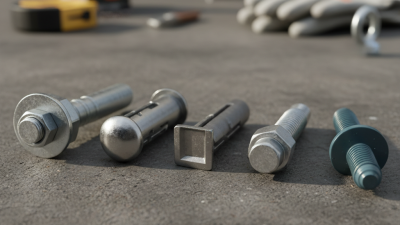
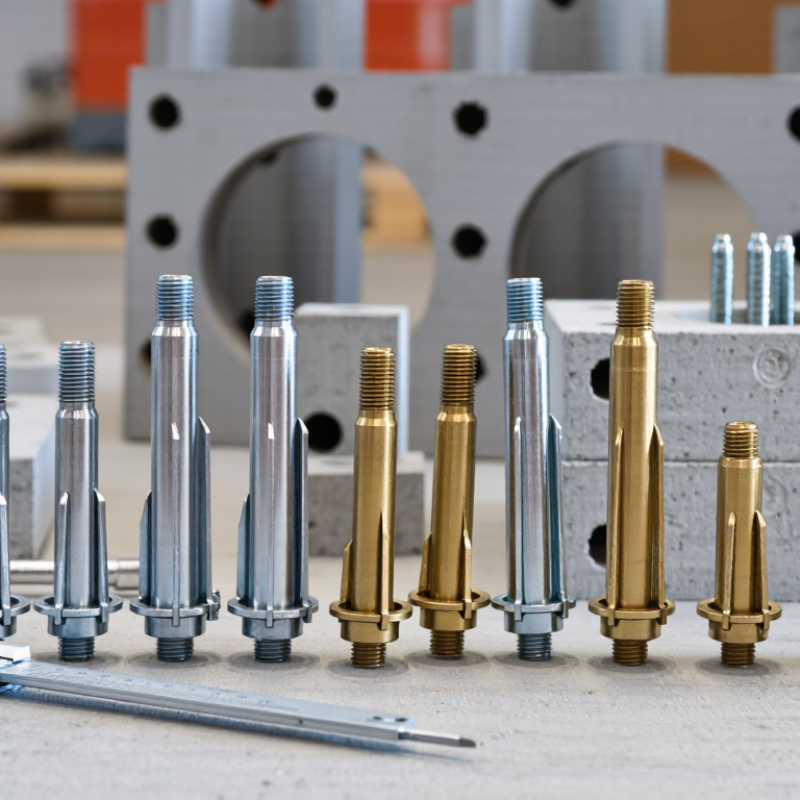
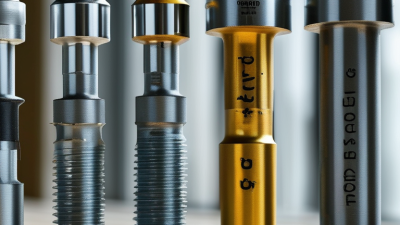
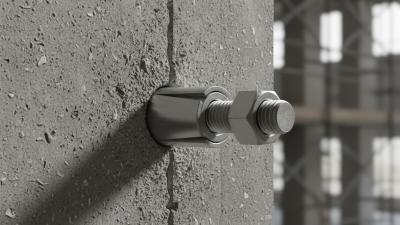
China sleeve anchors are mechanical fasteners designed for concrete, brick, and some masonry applications. A typical anchor includes a threaded stud, nut, washer, and expansion sleeve. The installer drills a hole, cleans it, and inserts the anchor. Tightening the nut pulls the cone into the sleeve. The sleeve then presses against the hole wall, creating friction and mechanical interlock.

Performance depends on more than anchor diameter. Concrete strength, embedment depth, edge distance, spacing, and installation torque all affect capacity. A 12 mm anchor does not automatically provide the same load in every base material.

ACI 318-19 Chapter 17 requires attention to concrete breakout, pullout, and steel failure. ASTM E488/E488M also provides a recognized method for evaluating anchor strength in concrete. These references help global buyers compare technical data instead of relying on catalogue claims.

Quality control should include thread inspection, sleeve expansion checks, coating measurement, and batch traceability. ICC-ES AC193 is another useful reference for mechanical anchor evaluation. For outdoor projects, buyers should request corrosion-test evidence, such as neutral salt spray results, while remembering that laboratory hours do not perfectly reproduce coastal exposure.

This is where mistakes happen. A slightly dirty hole can reduce reliability. So can excessive torque, which may damage the sleeve or concrete. Selecting a China-made sleeve anchor should involve tested performance, clear installation instructions, and independent documentation, not price alone.
Which China Sleeve Anchor Materials and Sizes Suit Your Project?

What Are the Best China Sleeve Anchors for Global Buyers?

Which China Sleeve Anchor Materials and Sizes Suit Your Project?

Material choice should follow the base environment, not only the purchase price. Zinc-plated carbon steel suits dry indoor concrete, such as warehouse floors and equipment rooms. Hot-dip galvanized steel offers better protection for humid areas. Stainless steel is safer near coastal air, washing zones, and outdoor stairs. Type 304 often fits general exposure, while Type 316 handles chloride-rich conditions more reliably. The extra cost can be justified. Sometimes it cannot.

Size selection depends on load, fixture thickness, edge distance, and embedment depth. Common metric options include M6, M8, M10, M12, and M16. An M8 anchor may suit a light handrail bracket, but a vibrating machine needs engineering verification. A simple diameter chart is not enough. According to ACI 355.2 qualification practice, mechanical anchors are assessed for tension, shear, cracked concrete, and installation behavior. EN 1992-4 also evaluates characteristic resistance using a 5% fractile approach, making test data more meaningful than advertised maximum loads. Ask for test reports showing concrete strength, embedment, tightening torque, and failure mode. Missing details are a warning.

Check whether the sleeve expands evenly around the bolt. Poor expansion can leave a loose fixture after repeated loading. ICC-ES AC193 evaluation criteria and equivalent regional standards provide useful reference points for qualification. Still, project conditions vary. A dry laboratory result may not represent dusty concrete, thin slabs, or coastal exposure. Depth, not diameter alone, often decides performance.

How to Compare China Sleeve Anchor Load Ratings and Quality

For global buyers, sleeve anchor load ratings should begin with test conditions, not the largest number in a catalog. ASTM E488/E488M evaluates anchors under tension and shear, while ICC-ES AC106 addresses mechanical anchors in concrete. These documents require controlled testing, but results still depend on concrete strength, embedment depth, fixture thickness, and edge distance. A rating from 25 MPa concrete cannot automatically represent performance in weaker masonry.

European Technical Assessment reports commonly reference EAD 330232-01-0601 and EN 1992-4 for mechanical fasteners in concrete. Compare characteristic resistance, allowable load, and design resistance separately. They are not interchangeable. Check whether the report includes cracked concrete, repeated loading, corrosion exposure, and installation torque. A 12 mm anchor may show strong laboratory pull-out results, yet fail earlier when the hole is dusty or under-drilled. Small details matter.

Quality comparison should include steel grade, sleeve expansion geometry, plating thickness, thread accuracy, and batch traceability. ISO 898-1 can help verify mechanical properties for carbon-steel components, although it does not certify the complete installed anchor. Request independent test reports, production inspection records, and installation instructions with drilling tolerances. I would distrust a clean table showing only “maximum load.” A neat spreadsheet can still mislead. Field conditions are less polite. One useful check is to compare the reported failure mode: steel failure, concrete breakout, pull-out, or edge splitting. The weakest mode often controls the real design.

What Are the Best China Sleeve Anchors for Global Buyers? - How to Compare China Sleeve Anchor Load Ratings and Quality

Anchor Configuration Typical Material and Finish Common Sizes Recommended Embedment Reference Working Tension* Reference Working Shear* Suitable Environment Quality Checks for Global Buyers
M6 Sleeve Anchor Carbon steel with electro-zinc coating M6 × 40–75 mm 35–45 mm 0.7–1.2 kN 0.9–1.5 kN Light-duty indoor fixing in dry concrete or masonry Check sleeve expansion, thread engagement, plating coverage, washer diameter and bolt head dimensions.
M8 Sleeve Anchor Carbon steel with electro-zinc coating M8 × 50–100 mm 45–60 mm 1.4–2.4 kN 1.8–3.0 kN General-purpose indoor installation, brackets and light equipment Request tensile and shear test results for the exact diameter, embedment and concrete strength.
M10 Sleeve Anchor Carbon steel with electro-zinc coating M10 × 60–120 mm 55–75 mm 2.5–4.2 kN 3.0–5.0 kN Medium-duty fixing in sound, non-cracked concrete Check proof-load consistency, sleeve wall thickness, cone hardness and minimum spacing requirements.
M12 Sleeve Anchor Carbon steel with electro-zinc coating M12 × 75–150 mm 65–90 mm 3.8–6.5 kN 4.5–7.5 kN Medium-duty structural support where project calculations permit sleeve anchors Verify dimensional tolerances, nut torque behavior, pull-out performance and batch traceability.
M8–M12 Hot-Dip Galvanized Sleeve Anchor Carbon steel with hot-dip galvanized coating M8, M10 and M12 Same as the selected diameter Use the underlying size rating; coating does not increase capacity Use the underlying size rating; coating does not increase capacity Outdoor or humid environments with moderate corrosion exposure Confirm coating thickness, thread condition after galvanizing, dimensional fit and salt-spray test method.
M6–M12 A2 Stainless Steel Sleeve Anchor Austenitic stainless steel, commonly A2 grade M6, M8, M10 and M12 Same as the selected diameter Confirm by size-specific testing; do not use carbon-steel values automatically Confirm by size-specific testing; do not use carbon-steel values automatically Indoor, urban outdoor and moderately corrosive environments Verify stainless grade, magnetic response limits, anti-seize requirements and galling resistance.
M6–M12 A4 Stainless Steel Sleeve Anchor Higher-corrosion-resistance stainless steel, commonly A4 grade M6, M8, M10 and M12 Same as the selected diameter Confirm by size-specific testing; material grade alone is not a load rating Confirm by size-specific testing; material grade alone is not a load rating Coastal, marine or chloride-prone environments, subject to engineering approval Request material certificates, corrosion-test details, torque guidance and evidence of lot-level inspection.
Technical basis and purchasing note: The reference working-load ranges are screening values for preliminary supplier comparison only. They assume sound, non-cracked concrete approximately C20/25 to C25/30, correct hole diameter, full recommended embedment, adequate edge distance and proper installation. Actual capacity depends on concrete strength, fixture thickness, anchor spacing, edge distance, installation torque, load direction and failure mode. Final design values should be taken from tested product data or an engineer-approved calculation. Ask suppliers for reports covering the exact anchor size, material, embedment, concrete condition and loading direction.
Comparison Dimension Minimum Buyer Requirement Preferred Evidence
Load rating Separate tension and shear values with stated safety factors Independent or witnessed tests using the exact production configuration
Dimensional accuracy Consistent diameter, sleeve length, thread and cone dimensions Inspection report with calibrated gauges and sampling plan
Material verification Declared carbon-steel or stainless-steel grade Mill test certificate or third-party alloy identification
Corrosion protection Clearly defined coating or stainless-steel grade Coating-thickness measurement and test method appropriate to the intended environment
Installation reliability Clear drill-bit diameter, embedment and tightening instructions Installation trial, torque verification and pull-test sampling
Production consistency Traceable batches and controlled raw materials Lot number, inspection records, retained samples and corrective-action process

What Certifications Should Global Buyers Check Before Ordering?

What Are the Best China Sleeve Anchors for Global Buyers?

Before ordering sleeve anchors, verify the certification scope, not just the certificate number. ISO 9001 can indicate controlled production, but it does not prove pull-out strength. The ISO Survey 2022 recorded more than 1.2 million ISO 9001 certificates worldwide. That figure shows broad adoption, not automatic product quality. Ask for the current certificate, audited site address, expiry date, and product scope. Traceability matters.

For concrete applications in Europe, check whether the anchor has an applicable European Technical Assessment under EAD 330232-01-0601. Request the Declaration of Performance, installation limits, cracked-concrete data, and resistance values. CE marking may apply through the Construction Products Regulation, but CE marking alone is not a performance guarantee. For North American projects, review independent testing against ASTM E488/E488M and any relevant acceptance criteria. Testing should cover tension, shear, edge distance, embedment depth, and corrosion exposure. Ask for raw test conditions, not only a polished summary.

Material documentation also deserves attention. Confirm the stainless-steel or carbon-steel grade, coating thickness, salt-spray method, and batch traceability. For European shipments, request REACH-related substance declarations where applicable. ISO 14001 may support environmental management, but it does not replace mechanical testing. One detail is often missed: an ISO certificate may cover the factory, while the supplied anchor comes from another site. I would treat that mismatch as a serious warning. A certificate alone is insufficient. Suppliers should also provide installation instructions with torque values and drill-bit requirements. Real projects are messy, and even good documentation cannot correct poor installation.

What Are the Best China Sleeve Anchors for Global Buyers?

Before ordering, verify the anchor's declared steel property class, test documentation, corrosion protection, production traceability, and compliance with the requirements of the destination market. The chart shows nominal tensile-strength levels defined for ISO 898-1 fastener property classes; it applies only when the manufacturer formally declares the relevant class for the anchor components.

Certification checklist for global buyers:
  • Check whether ISO 898-1 mechanical-property claims are supported by batch test reports and material traceability.
  • For structural fastening in Europe, confirm whether the product has the required technical assessment and design information under the applicable European rules, including EN 1992-4 where relevant.
  • Request independent tensile, shear, edge-distance, spacing, and installation test results for the specific anchor diameter and base material.
  • Verify coating or stainless-steel specifications, corrosion-resistance evidence, lot identification, and consistent marking on packaging.
  • Confirm that the documentation matches the destination country's building-code, import, and product-safety requirements.

How to Evaluate Suppliers, Pricing, Packaging, and Shipping Terms?

What Are the Best China Sleeve Anchors for Global Buyers?

Choosing China sleeve anchors requires more than comparing unit prices. A capable supplier should explain anchor diameter, length, steel grade, plating, expansion range, and recommended base materials. Ask for product drawings and recent inspection records. Sample testing matters. Install anchors in concrete blocks, apply the expected load, and check thread damage or sleeve movement. A polished catalog is not proof of consistent production.

Pricing should include more than the factory quotation. Compare minimum order quantities, tooling charges, sample fees, export cartons, and payment terms. A lower price may hide thinner plating or weaker packaging. I have seen attractive offers become expensive after repacking and replacement costs. Request a tiered quotation for several quantities. It shows how pricing changes as production scales.

Packaging must protect threads and expansion sleeves during long transit. Strong inner bags, divided cartons, moisture protection, and clear labels reduce counting errors. Confirm carton weight and pallet dimensions before booking freight. Shipping terms also deserve careful review. Under FOB, the buyer usually manages ocean freight after loading. Under CIF, insurance coverage and destination charges still need checking. Ask for lead time, port options, shipping documents, and a realistic delay allowance. Suppliers often provide optimistic schedules. Leave room for weather, inspections, and production changes.