Inquiry
Form loading...
Selecting the top Nut Prestressed Anchorage manufacturers worldwide requires more than comparing catalog prices. These components transfer high forces through wedges, anchor plates, nuts, and ducts. A small dimensional error can affect stressing accuracy, corrosion protection, and long-term concrete performance. The International Federation for Structural Concrete, through fib Model Code guidance, emphasizes verification, durability design, and controlled installation. That technical foundation should guide every manufacturer assessment.
Recent industry research also shows why this market deserves careful attention. Grand View Research and MarketsandMarkets have reported continued growth in global prestressed concrete and construction reinforcement demand, driven by bridges, rail systems, towers, and industrial facilities. Their findings indicate expanding infrastructure investment, but market growth does not automatically prove product reliability. It may even increase the risk of rushed supplier selection. Independent testing, traceable steel grades, fatigue data, and documented load performance remain essential.
This review examines manufacturers through practical and technical criteria. These include anchorage capacity, thread precision, wedge compatibility, manufacturing experience, quality systems, and project references. Certifications such as ISO 9001 can support credibility, yet certification alone is not enough. Engineers should still review factory inspection records, test reports, coating specifications, and installation guidance. Site experience matters. A manufacturer that performs well in controlled testing may still disappoint when tolerances, weather, or contractor training vary. The strongest Nut Prestressed Anchorage suppliers combine engineering support with consistent production. However, rankings can never replace project-specific design checks. That limitation deserves attention.
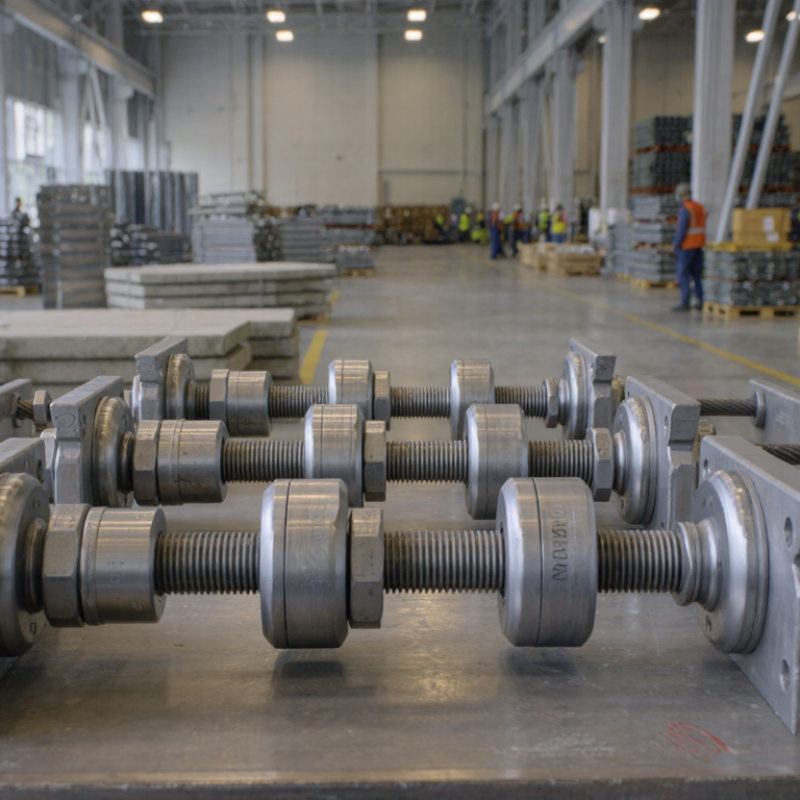
A nut prestressed anchorage system holds tension in a steel tendon through a threaded nut, bearing plate, and anchorage head. The tendon transfers force into the structure through the plate and surrounding concrete or rock. Unlike wedge systems, the nut provides direct mechanical engagement with the thread. This arrangement can support controlled stressing and later inspection.
The process begins with checking thread condition, alignment, steel grade, and bearing surfaces. Crews then position the tendon, place the plate, and apply tension with a calibrated hydraulic jack. The nut is tightened while the load remains active. Torque alone is not enough. Friction can distort the result. Small details matter.
Reliable work depends on installation records, calibration certificates, and visual checks after stressing. Inspectors should look for damaged threads, uneven plate contact, cracking, and signs of corrosion. Protective caps and suitable grout can reduce moisture exposure, but protection is never automatic. A practical warning: over-tightening can damage threads or crush local concrete. Under-tightening can cause movement and force loss. Field conditions are rarely perfect. Dust, temperature, access, and imperfect alignment may affect performance. That limitation deserves honest review during design and inspection.
| Technical Dimension | Typical Data or Specification | Engineering Function | Common Reference or Verification Method |
|---|---|---|---|
| System definition | A mechanical anchorage that transfers prestressing force through a threaded tendon, bearing plate, washer, and load-bearing nut. | Locks the stressed tendon and transfers the force into concrete, steel, masonry, or a structural support. | Project design documents, structural calculations, and applicable national standards. |
| Primary tendon type | Threaded prestressing bar or threaded steel tendon; the exact diameter and strength class are selected by design. | Provides the tensile resistance required for rock anchors, soil anchors, tie rods, structural strengthening, and temporary works. | Tendon mill certificates, tensile testing, thread inspection, and design resistance calculations. |
| Nut function | High-strength load-bearing nut with a matched internal thread; spherical or flat seating may be used depending on the anchorage design. | Maintains the locked-in elongation and distributes the tendon force into the bearing assembly. | Thread gauge inspection, hardness testing, dimensional inspection, and proof-load testing. |
| Bearing plate | Steel plate sized to spread the anchorage force over the supporting material; thickness and footprint are project-specific. | Reduces local bearing stress and limits crushing, punching, bending, or splitting around the anchorage zone. | Plate bending, concrete bearing, edge distance, punching shear, and local reinforcement calculations. |
| Load-transfer mechanism | Tendon tension is transferred through the nut and washer or anchor head into the bearing plate and then into the structure or ground. | Creates a stable reaction point after stressing and prevents uncontrolled tendon retraction. | Static load testing, displacement monitoring, and comparison with the approved load–extension curve. |
| Typical stressing sequence | Position the anchorage, tension the tendon with a calibrated jack, verify force and elongation, then seat or tighten the nut. | Achieves the specified prestress while confirming that actual extension agrees with the calculated value. | Approved method statement, calibrated pressure gauge, jack calibration certificate, and installation records. |
| Load range | Available capacities vary widely, from small structural tie systems to high-capacity ground-anchor systems; no universal rating applies. | Allows the same basic anchorage concept to be adapted to different tendon sizes and design actions. | Use the certified characteristic tensile capacity and the project-specific factor of safety rather than nominal appearance. |
| Material requirements | Prestressing steel and anchorage components require controlled mechanical properties, compatible threads, and suitable corrosion protection. | Ensures adequate tensile strength, fatigue resistance, ductility, and long-term durability. | Material certificates, chemical composition records, tensile tests, hardness tests, and coating inspection. |
| Corrosion protection | May include galvanizing, protective grease, encapsulation, grout, sheathing, or a combination selected for the exposure class. | Protects the tendon and anchorage from moisture, chlorides, carbonation, chemicals, and stray electrical currents. | Exposure assessment, coating thickness checks, encapsulation inspection, and durability design review. |
| Installation tolerance | Thread engagement, nut seating, plate alignment, tendon inclination, and bearing surface flatness must remain within the approved installation tolerances. | Prevents eccentric loading, thread damage, uneven bearing, and premature loss of prestress. | 施工 inspection checklist, alignment measurement, visual inspection, and installer records. |
| Testing and acceptance | Acceptance commonly considers applied load, measured elongation, residual displacement, lock-off load, and observed damage. | Confirms that the installed system satisfies the design load and behaves consistently during stressing. | Project specifications, proof tests, performance tests, lift-off tests, and long-term monitoring where required. |
| Applicable technical framework | Requirements depend on whether the system is used for prestressed concrete, ground anchors, rock bolts, temporary works, or structural tie rods. | Ensures that design, materials, testing, and installation are evaluated under the correct application category. | Examples include EN 1992, EN 1537, EN 14199, fib recommendations, PTI guidance, and applicable ASTM or national standards. |
| Supplier evaluation criteria | Verified load capacity, traceable materials, compatible components, documented testing, corrosion options, installation support, and consistent quality control. | Provides a technical basis for comparing manufacturers without relying only on price or nominal tendon diameter. | Review technical datasheets, third-party test reports, quality certificates, factory production controls, and project references. |
Note: Final dimensions, capacities, materials, tolerances, and test requirements must be confirmed by the project engineer and the applicable local standard.