Inquiry
Form loading...

How to Choose the Best Tie Back Anchorage in 2026?

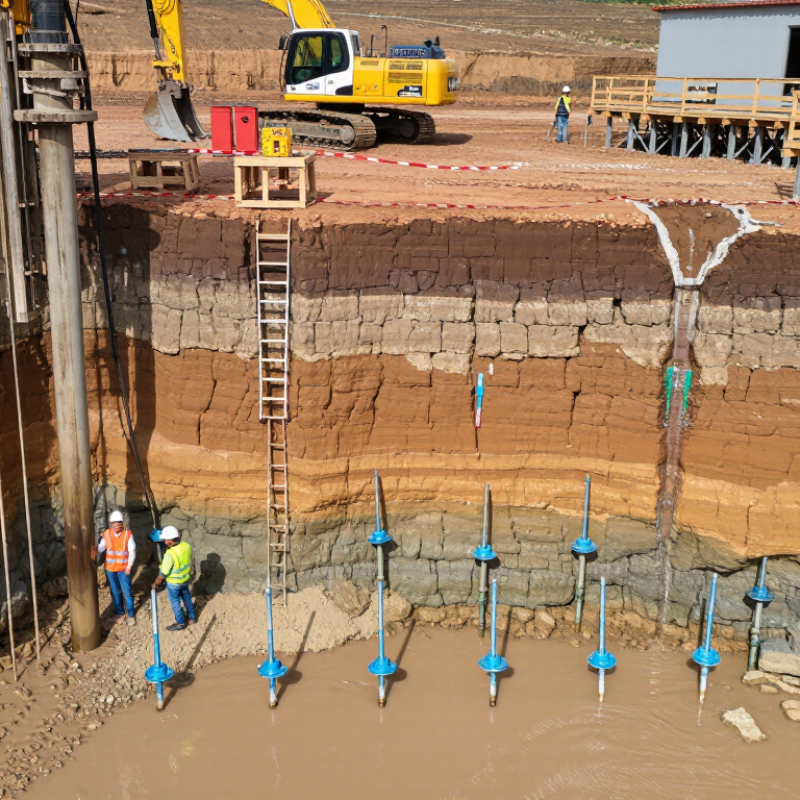
Choosing the best Tie Back Anchorage begins with the ground, not the catalog. Soil layers, groundwater, excavation depth, and nearby structures all shape the anchor’s performance. A system that suits dense gravel may behave very differently in soft clay or fractured rock. Small details matter: a wet borehole, a misplaced bond zone, or an unexpected utility can change the installation plan.

FHWA’s Geotechnical Engineering Circular No. 4, Ground Anchors and Anchored Systems (FHWA-IF-99-015), provides technical guidance on investigation, design, construction, and testing. The Post-Tensioning Institute’s Recommendations for Prestressed Rock and Soil Anchors also addresses anchor design and field verification. These documents are practical starting points, not substitutes for project-specific engineering. Donald A. Bruce, a recognized specialist in grouting and ground-anchor practice, is relevant to this discussion; however, a verified verbatim quotation from him should be checked against its original publication before use. It would be unwise to invent one.

Look beyond the rated load. Compare corrosion protection, tendon type, bond length, drilling method, stressing access, and test requirements. Ask how the proposed system will be checked in the actual ground. A tidy drawing is not proof of field performance.

There is no universal best anchor. Sometimes the chosen detail needs revision after drilling reveals conditions the investigation missed. That is not failure; it is a reason to document decisions and reassess them carefully.
How to Choose the Best Tie Back Anchorage in 2026?

Understanding Tie-Back Anchorage and Its Role in Fall Protection

A tie-back anchorage is a connection point or approved setup that lets a worker attach fall-protection equipment to a suitable structure. In some systems, a tie-back lanyard wraps around a structural member and connects back to itself. The member must be approved for that use; a convenient pipe or roof rail is not automatically safe. The anchorage, connector, and harness work as one system. Each part needs to match the equipment instructions and the job conditions.

Picture a worker near a roof edge, with a steel beam within reach. Before connecting, check the beam’s condition, the tie-back’s permitted configuration, and whether sharp edges could damage the webbing. Also consider fall clearance and swing-fall risk; a strong anchor can still leave a worker striking a lower level or nearby wall. These details are easy to miss in a quick walk-through. Not always obvious. A qualified person should verify the structure and setup when capacity or compatibility is uncertain. Keep inspection records, remove damaged equipment from service, and reassess the setup when the work position changes. A careful check may feel slow, but guessing is worse.

Assessing Site Conditions, Loads, and Worker Requirements

How to Choose the Best Tie Back Anchorage in 2026?
Assessing Site Conditions, Loads, and Worker Requirements

A suitable tie-back anchorage starts with the structure beneath it. Check whether the attachment point is sound, accessible, and appropriate for the intended connection. Look for cracked concrete, loose masonry, corrosion, weak roof edges, or surfaces that could shift under load. The site may look sturdy while hiding a problem.

Next, assess how forces could act during a fall. Consider the number of workers, the planned work area, lifeline direction, and possible swing-fall exposure. Keep the line path clear of sharp edges and moving equipment. Small details matter. Anchorage capacity alone does not confirm that the entire system will perform as intended. A qualified person should assess the setup against equipment instructions and applicable requirements.

Worker needs matter just as much as site conditions. Confirm that the harness and connecting components are compatible, and check that workers can reach the task without leaning or stepping beyond safe limits. Estimate fall clearance, including lifeline stretch and the worker’s position. Not always obvious. Plan how a suspended worker would be rescued, and make sure the crew understands the plan. Sometimes the best anchor is inconvenient to install; that trade-off deserves a careful second look, not a quick assumption.

Tie-Back Anchorage Capacity: OSHA Prescriptive Benchmark

The chart shows the OSHA prescriptive anchorage benchmark of 5,000 lbf (22.2 kN) per attached employee. Values for two to four employees are calculated by multiplying that benchmark by the number of employees. This is a reference—not a substitute for evaluating the actual structure, anchor installation, load direction, fall clearance, or rescue plan.

Under 29 CFR 1926.502(d)(15), an anchorage must support 5,000 lbf per attached employee, or be designed, installed, and used under the supervision of a qualified person as part of a complete personal fall-arrest system with a safety factor of at least two. Check site conditions and system compatibility before selecting an anchorage.

Comparing Tie-Back Anchorage Types and Materials

Choosing tie-back anchorage means matching the tendon to the ground, load, and service life. Strand anchors suit longer tendons and flexible installation; solid bars can be simpler for shorter, more accessible runs. Neither is automatically better. FHWA’s Ground Anchors and Anchored Systems (GEC No. 4, 1999) describes seven-wire steel strand tendons, including 15.2 mm strand with a 270 ksi grade. That gives engineers a useful reference point, not a one-size-fits-all specification. Actual capacity still depends on bond length, grout, ground conditions, and testing.

Material protection matters as much as tendon type. Temporary anchors may use simpler protection than permanent anchors, which need corrosion protection suited to their exposure and design life. Options include grout cover and protective sheathing; details should follow the project specification and relevant test results. A coating or sleeve can look reassuring on paper. Poor detailing at the anchor head can still leave a weak point. I would not treat this as a minor installation detail.

Tips: Ask for ground investigation results, tendon material certificates, corrosion-protection details, and acceptance-test records. Check whether the quoted design load matches the tested anchor. FHWA guidance is a useful technical reference, but site-specific engineering remains essential. One detail is easy to miss: drainage near the anchor head can affect long-term durability.

Checking Compatibility, Standards, and Installation Requirements

Choosing a tie-back anchorage starts with the actual work location, not a catalogue description. Identify the supporting structure, the direction of expected loading, and the type of personal fall-arrest equipment being used. A concrete slab, steel beam, and roof edge each present different attachment conditions. Check that every connected component is approved for use with the others. A connector that fits physically may still be unsuitable.

Check the applicable safety standards for your region and work type. In the United States, relevant ANSI/ASSP Z359 requirements may apply; local rules and the equipment instructions also matter. Confirm the anchorage capacity and installation method with a qualified person. Do not assume an existing structural member is adequate. That assumption deserves a second look. Keep records of inspections and any engineering approval.

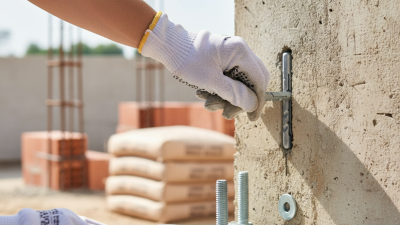
Installation details can change the risk. Follow the specified fasteners, edge distances, and tightening procedure, and inspect the substrate for cracks, corrosion, or damage. Verify clearance below the worker, potential swing-fall paths, and access for rescue. Small details matter. A layout that works on paper may not fit around roof equipment or a parapet. Recheck it on site before use, and pause if the structure or setup differs from the plan.

How to Choose the Best Tie Back Anchorage in 2026? – Checking Compatibility, Standards, and Installation Requirements
Anchorage type or application Compatibility checks Standards and load checks Installation requirements When it may be suitable
Tieback for a suspended scaffold or suspended access system Confirm the tieback, suspension equipment, connectors, and structural anchorage are designed to work together. Verify the supporting structure and the tieback’s intended direction of loading. For U.S. construction, check OSHA 29 CFR 1926.451(d) and the applicable equipment instructions. Required capacity depends on the complete system design; do not assume one universal tieback rating. Secure to a structurally sound part of the building. OSHA requires tiebacks to be installed perpendicular to the face of the building, or at an opposing angle when perpendicular installation is not feasible. Do not secure them to standpipes, vents, or other piping systems. A purpose-designed suspended-access system where the building structure and tieback layout have been verified.
Permanent or temporary personal fall-arrest anchorage Check the anchor’s approved use, connector type, number of users, direction of loading, fall clearance, and compatibility with the harness and connecting subsystem. Under U.S. OSHA construction rules, 29 CFR 1926.502(d)(15), an anchorage must support 5,000 lb (22.2 kN) per employee attached, or be designed, installed, and used as part of a complete system under a qualified person with a safety factor of at least two. General-industry requirements are addressed in 29 CFR 1910.140(c)(13). Install and use according to the anchor instructions and approved system design. Account for edge distance, substrate condition, anchor orientation, and potential swing-fall exposure. Personal fall arrest only when the anchor is approved for that purpose and the entire system meets applicable requirements.
Post-installed anchor in concrete Verify concrete condition and strength, member thickness, reinforcement location, anchor type, embedment, edge distance, and the direction and magnitude of the design load. Use an anchor with documented suitability for the specific substrate and loading. The structural design and applicable building-code requirements must be checked for the actual installation. Follow the anchor manufacturer’s drilling, hole-cleaning, installation, and curing instructions. Do not install into cracked, deteriorated, or otherwise unsuitable concrete unless the anchor and design specifically allow it. Concrete structures where the substrate and installation details can be verified and the anchor has been selected for the required load case.
Steel-beam attachment or beam clamp Confirm flange or section dimensions, steel condition, connector fit, load direction, and whether the attachment is approved for the intended tieback or fall-protection use. Use the attachment’s documented capacity and the structural engineer’s assessment of the supporting steel. Do not treat a general-purpose clamp as a rated anchorage without supporting documentation. Install in the approved orientation and secure all locking components. Check for deformation, corrosion, coatings, or geometry that could prevent full engagement. Exposed structural steel that matches the attachment’s stated dimensions and permitted loading directions.
Parapet-mounted or parapet-clamp anchorage Check parapet height, thickness, shape, material, condition, and the device’s permitted attachment configuration. Confirm whether the device is approved for tieback, fall arrest, or another specific use. Use only within the device’s documented limits and the project’s structural design. A parapet that appears substantial is not, by itself, proof of adequate capacity. Position and secure the clamp exactly as specified. Inspect the parapet for cracks, loose coping, deterioration, and other conditions that could compromise attachment. Only where the device is specifically approved for the parapet geometry and intended system.
Structural member attachment using a sling or wrap Verify that the member is structural and suitable, and that the sling, connector, and attachment method are approved for the load direction and configuration. Check for sharp edges and abrasion hazards. Use the component’s rated configuration and the applicable system design. Capacity may change with wrap, choke, basket, or edge-contact configurations. Protect against cutting and abrasion using an approved method. Do not wrap around piping, handrails, or other items unless they are explicitly designed and approved as anchorages. Temporary attachment to a verified structural member when the sling manufacturer permits the exact configuration.
Selection note: “Tieback anchorage” can refer to a suspended-access tieback or to an anchorage used in a personal fall-protection system; these are not automatically interchangeable. Confirm the application, governing jurisdiction, current adopted standards, equipment instructions, substrate capacity, and installation details with a qualified person or structural engineer. Inspect the completed installation before use and after any event that could affect its integrity.

Selecting and Maintaining the Right Anchorage for 2026 Needs

Choosing tie-back anchorage for 2026 starts with ground conditions, not catalog dimensions. Review geotechnical data, excavation geometry, groundwater, nearby utilities, and expected loads with a qualified engineer. An anchor suited to dense soil may perform poorly in fractured rock or variable fill. Small differences matter. Confirm that the free length extends beyond the potential failure surface and the bond zone reaches competent ground. Check drilling access, installation angle, and head clearance against actual site constraints. These details can be easy to miss on drawings. Set testing methods and acceptance criteria before installation begins.

Good selection also depends on maintenance planning. Keep records of anchor locations, installation dates, test results, and corrosion protection. Inspect exposed anchor heads for damaged seals, coating loss, or water entry, especially after site work nearby. Rust is a warning. For permanent systems, establish inspection intervals based on exposure, design life, and the consequences of failure. I would not treat a clean test sheet as proof that every anchor will age equally. Groundwater and workmanship can vary across one wall. If movement, cracking, or unusual corrosion appears, have a qualified engineer assess the cause before repairs are chosen.